

“Exponential rapidly rising or falling markets usually go further than you think, but they do not correct by going sideways.”
— Bob Farrell’s Rule #4 of Investing

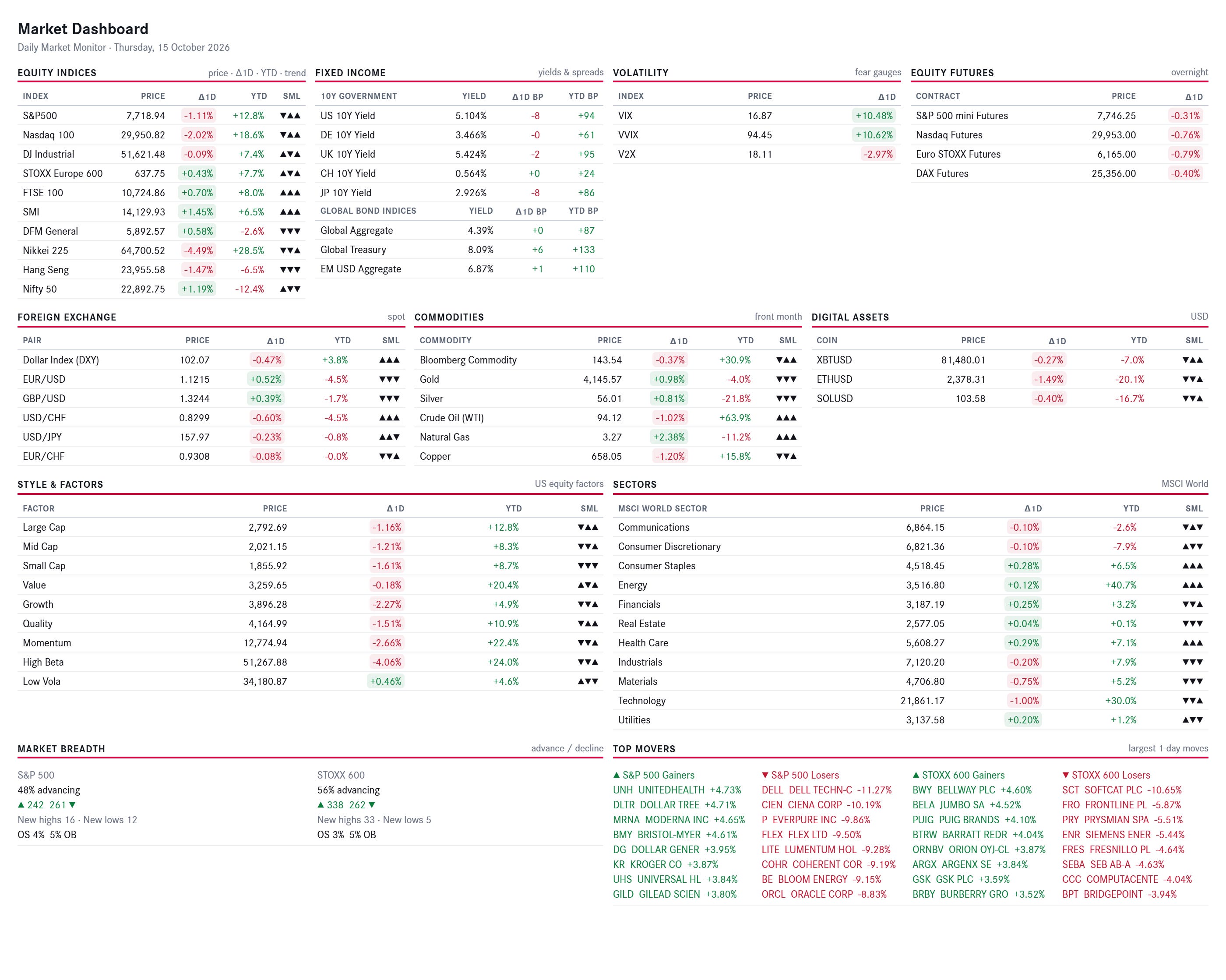
For the full dashboard, please click on ‘Download’ below:


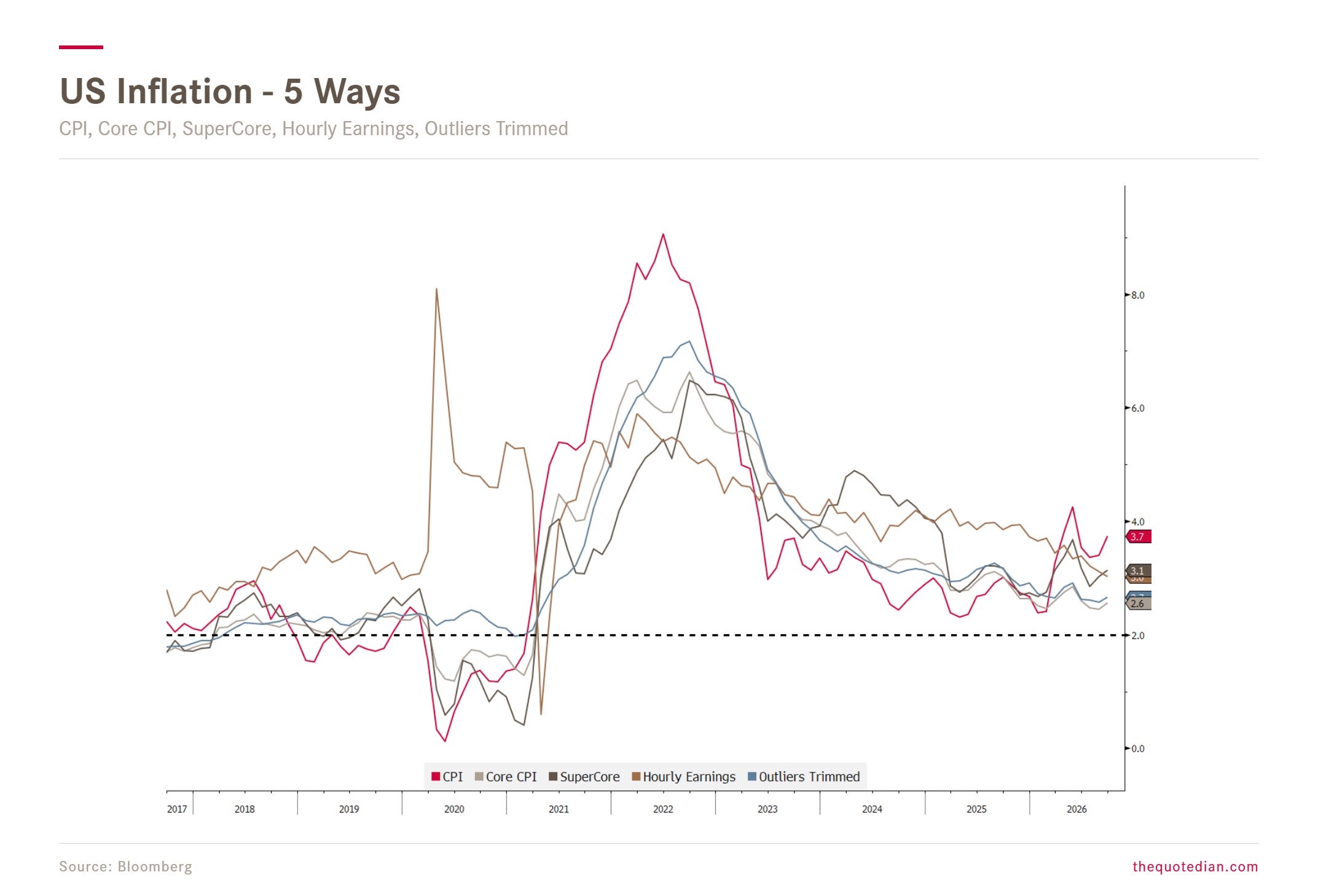
Slice and dice it any way you like - US Inflation readings headed higher again over the past month. One notable, but also sad, exception: wages!
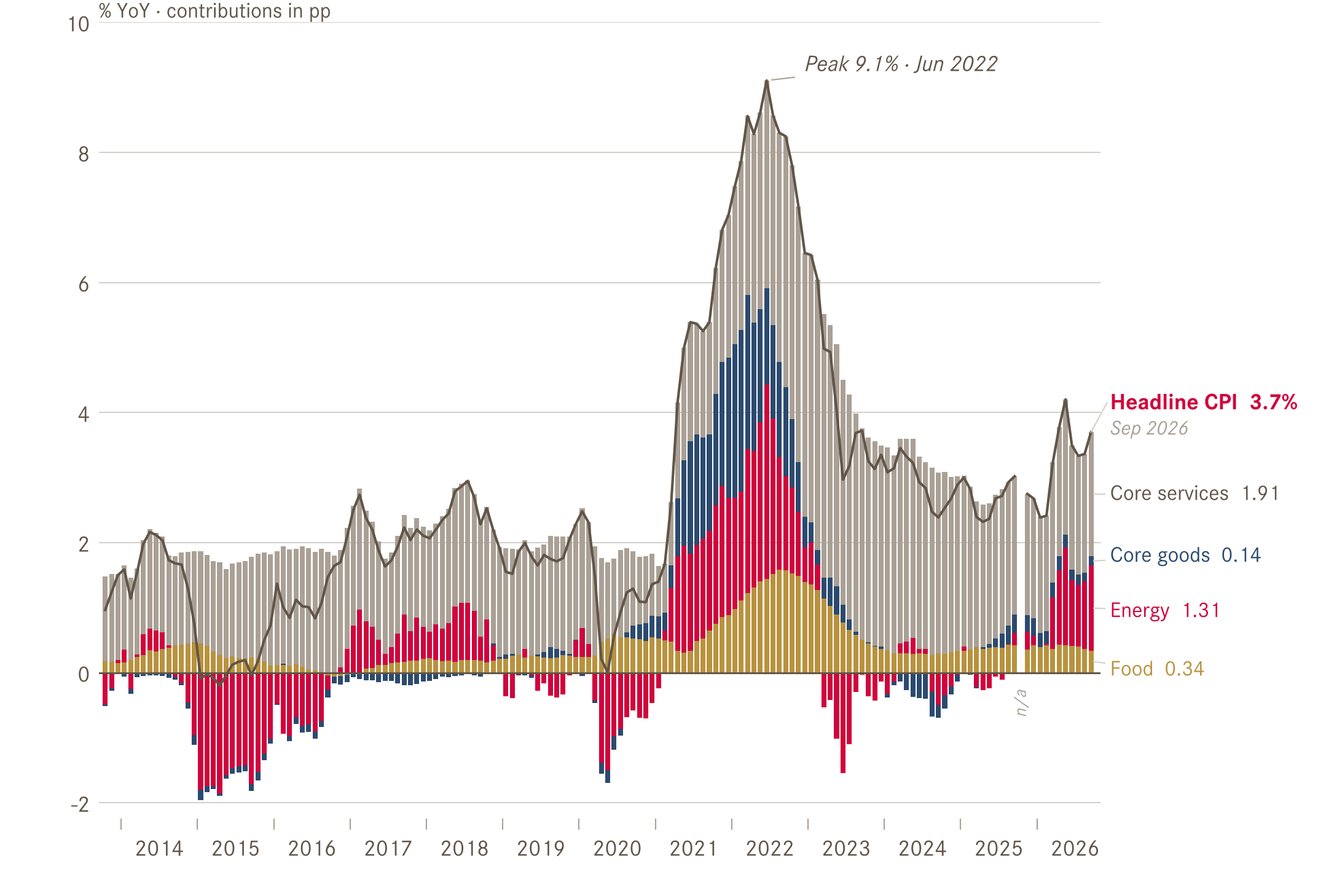
Oh, it’s all just about that ‘transitory’ higher oil price then, you will argue. Well, core CPI already hints at that, but it is not only about higher energy prices. Services continue to be the larger contributor to inflation:
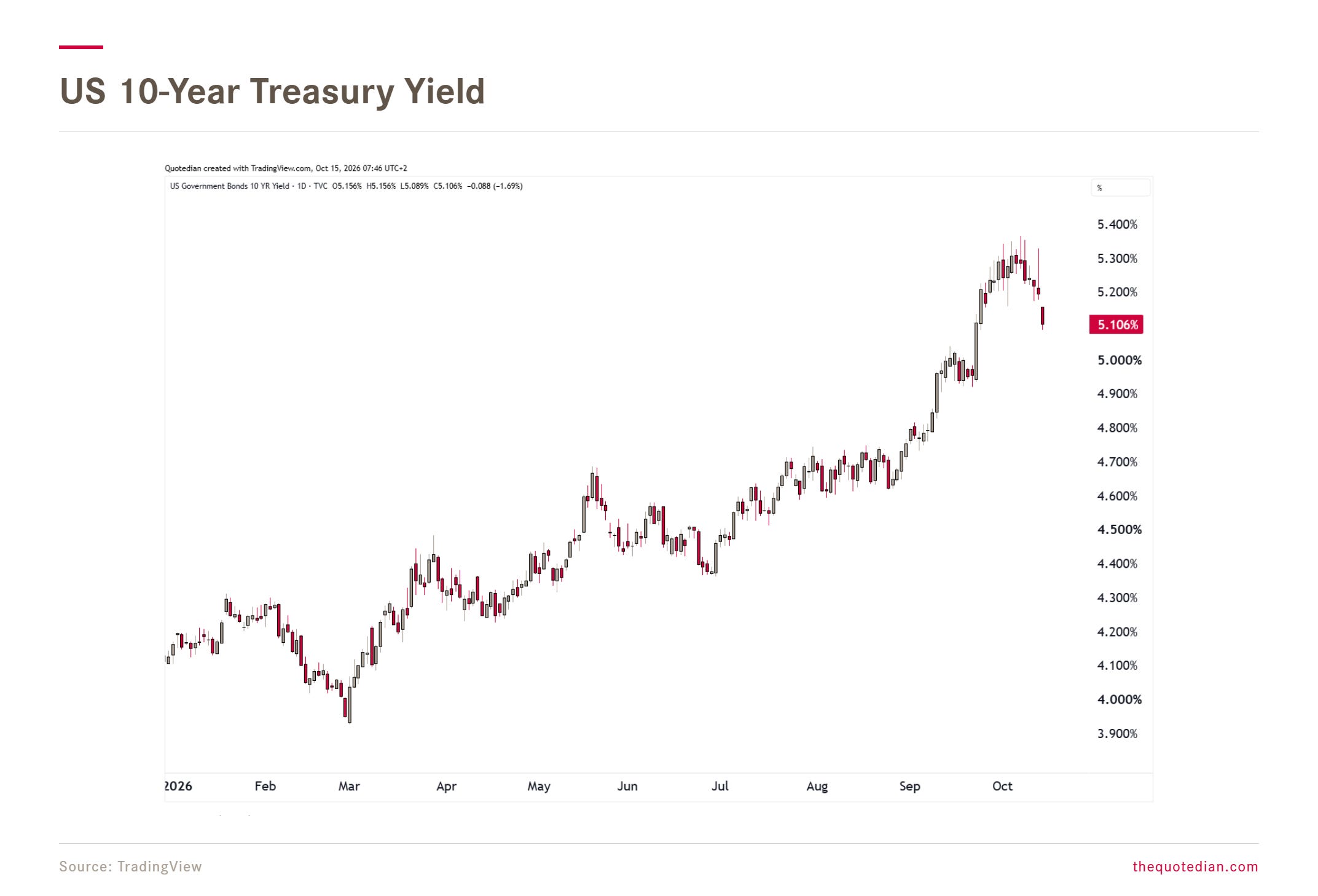
The bond market at first reacted as you would expect it to react via pushing yields higher. However, at above 5.30, potential bond buyers were satisfied enough with the elevated level of yields,
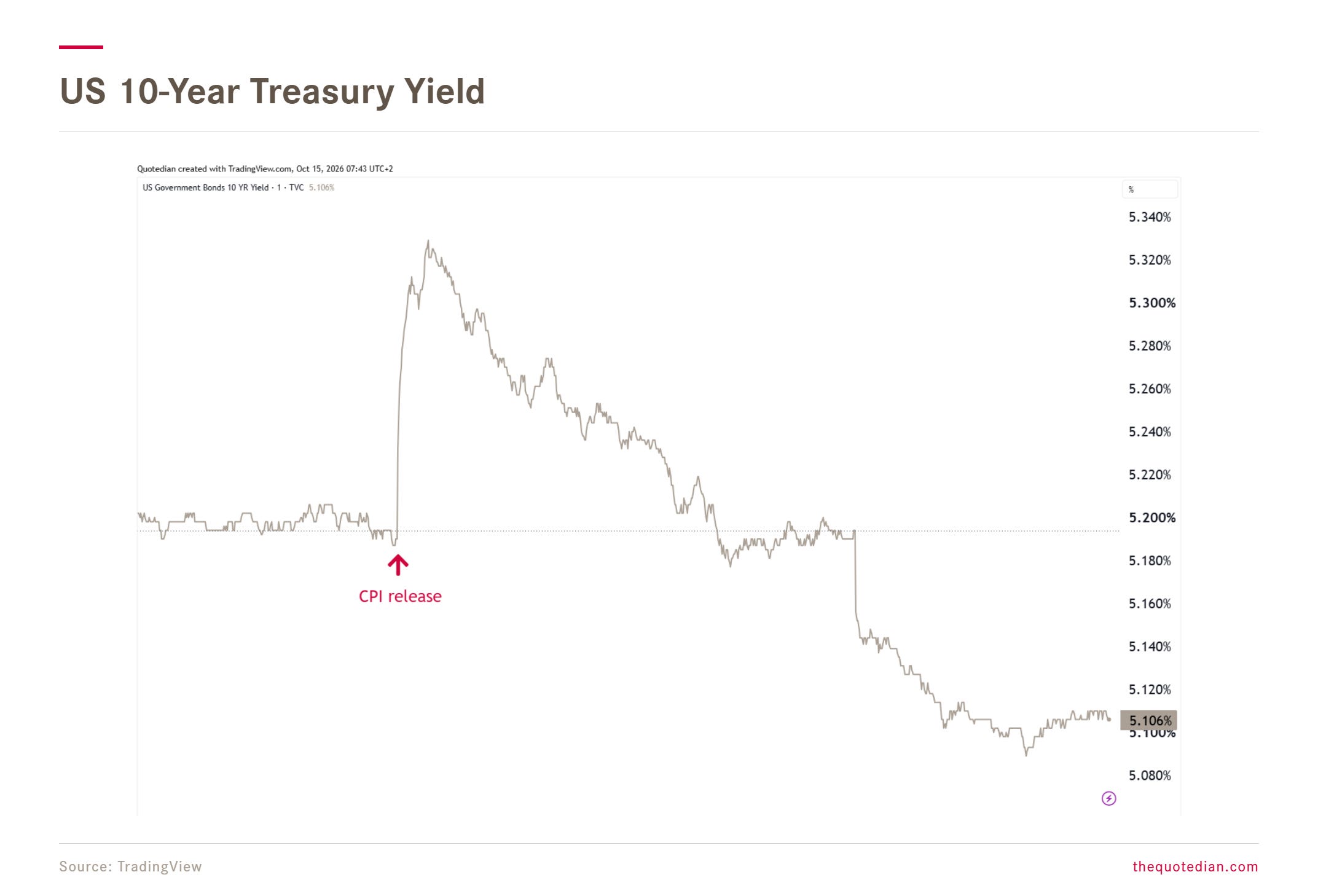
starting their purchases and pushing yields to their lowest level in over three weeks in the process:
Stocks in the meantime had their own path - well, maybe some pressure came after the higher inflation reading and the prospect of a continuously hawkish Fed, but the main focus was on the AI story.
Market breadth would confirm that, as whilst stocks (S&P 500) where down for a fifth consecutive session, the ratio of rising and falling stocks was actually quite precisely 1:1, i.e. it was not a general ‘let’s get out’ session:
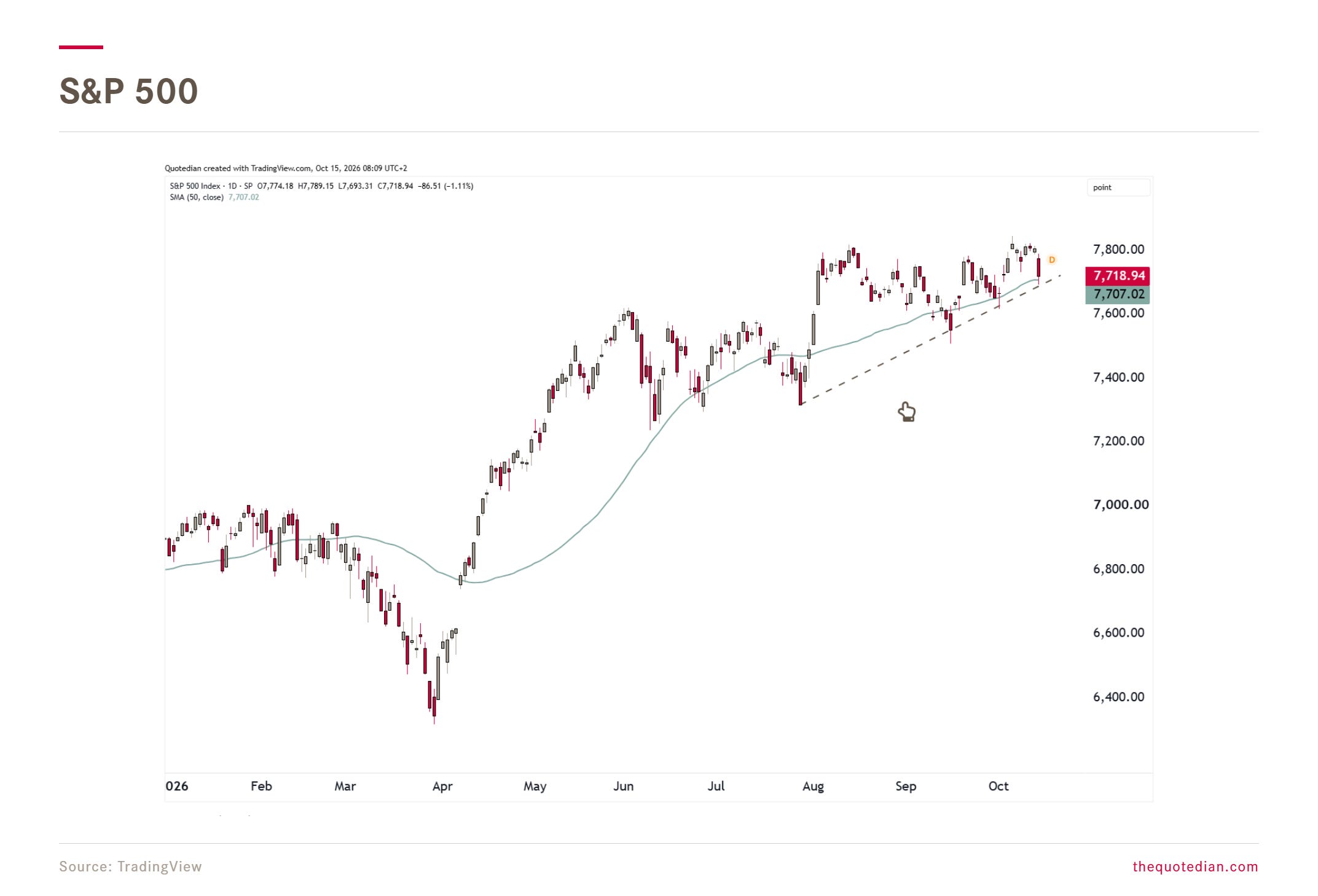
This was the first >1% drop in the S&P 500 in 54 trading sessions, but the true action was focused in the tech sector, with the Nasdaq 100 dropping 2%.
But even that paled in comparison to the 4%-plus decline in the Philadelphia semiconductor index, popularly known as the SOX:
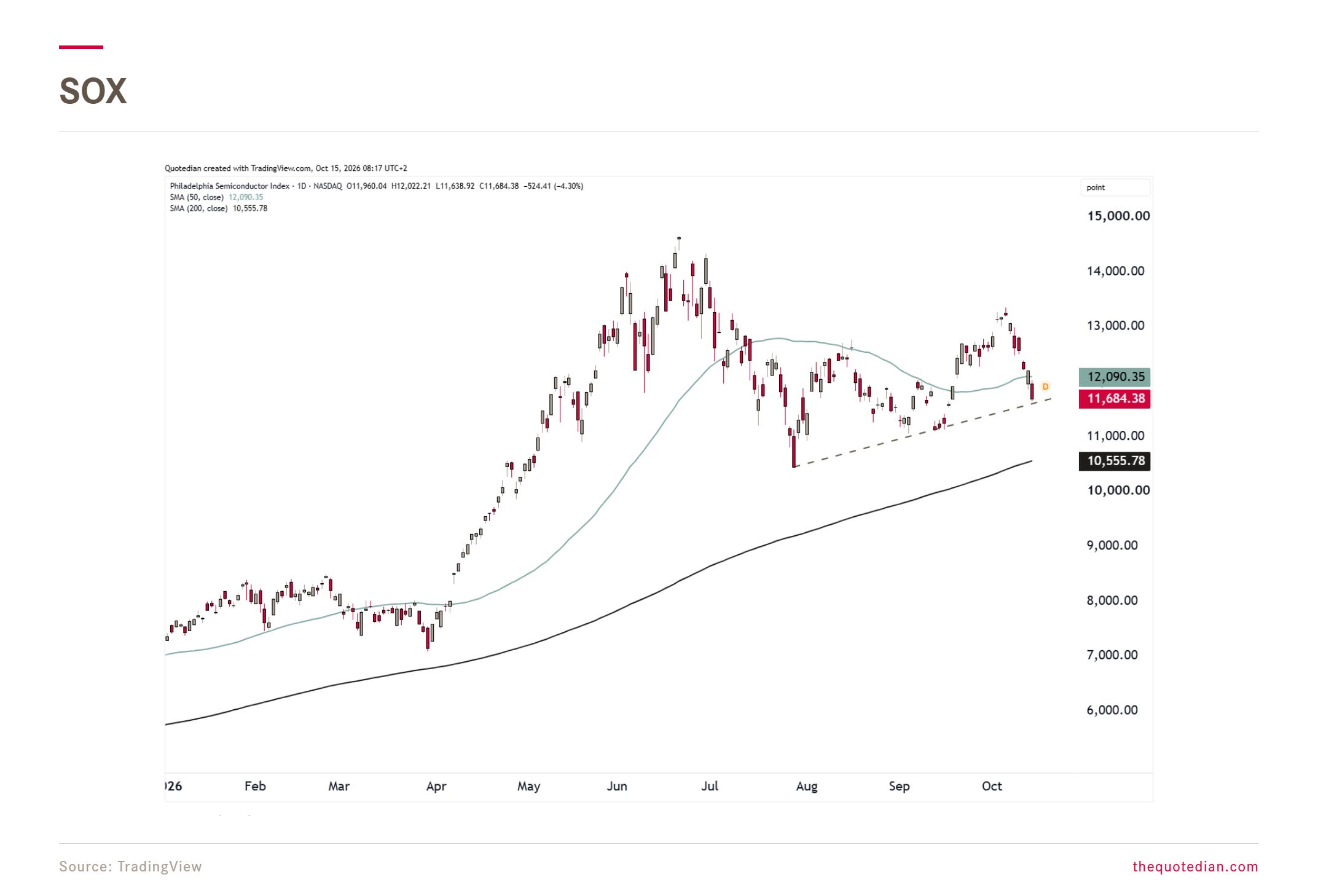
Technically, semiconductors are still in a bear market, even though they still trade above their 200-day moving average, as they never hit a new high after a >20% decline:
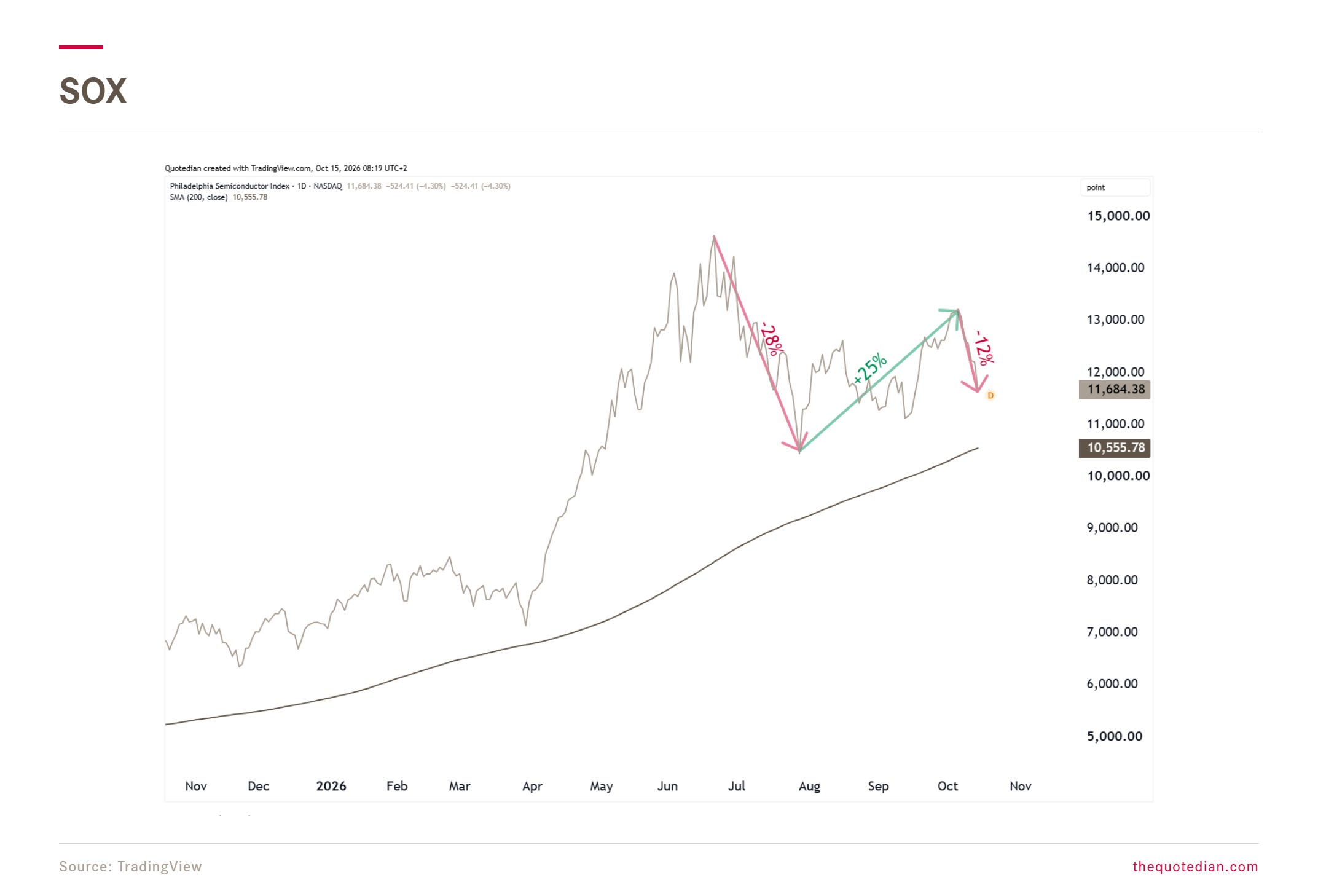
I will not spoil any party (just yet), but you’ve read it first here: big sell-offs, followed by face-ripping recovery rallies remind me of 2000-2002.
One of the culprits for the tech/semi sell-offs is apparently the credit of CoreWeave, which saw its CDS (Credit Default Swap) rate blow-out to >1,100 (note for the uninitiated: CDS readings above >1,000 are considered bankruptcy-ripe):
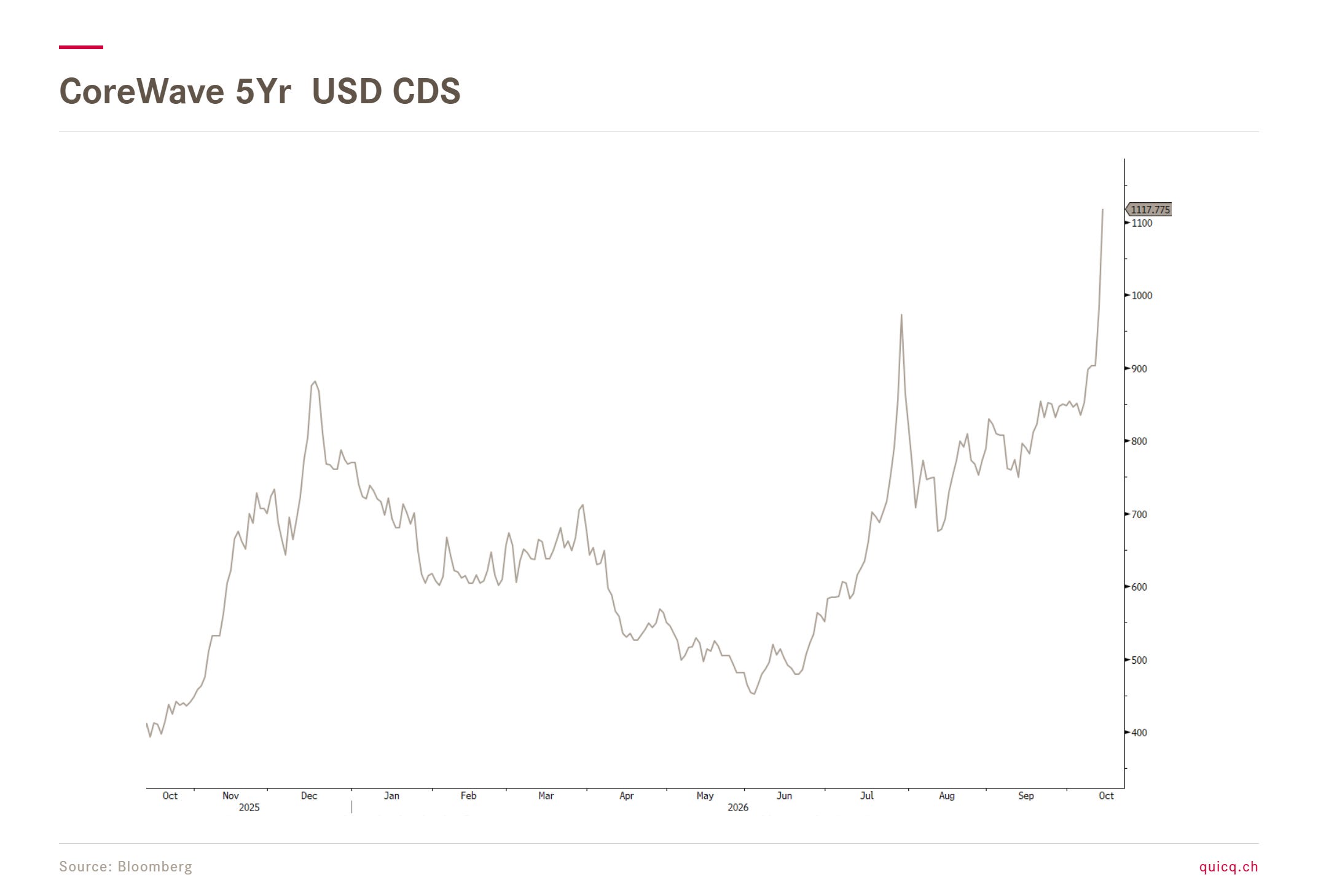
In bond prices terms, this meant that for example to company’s 9.625% 2032 bond can now be bought at below 79 for a yield of >15%.
Attractive?
Caveat Emptor…
In Asia, stocks retreated too, lead by an unattractive four and a half percent drop in the Nikkei 225:
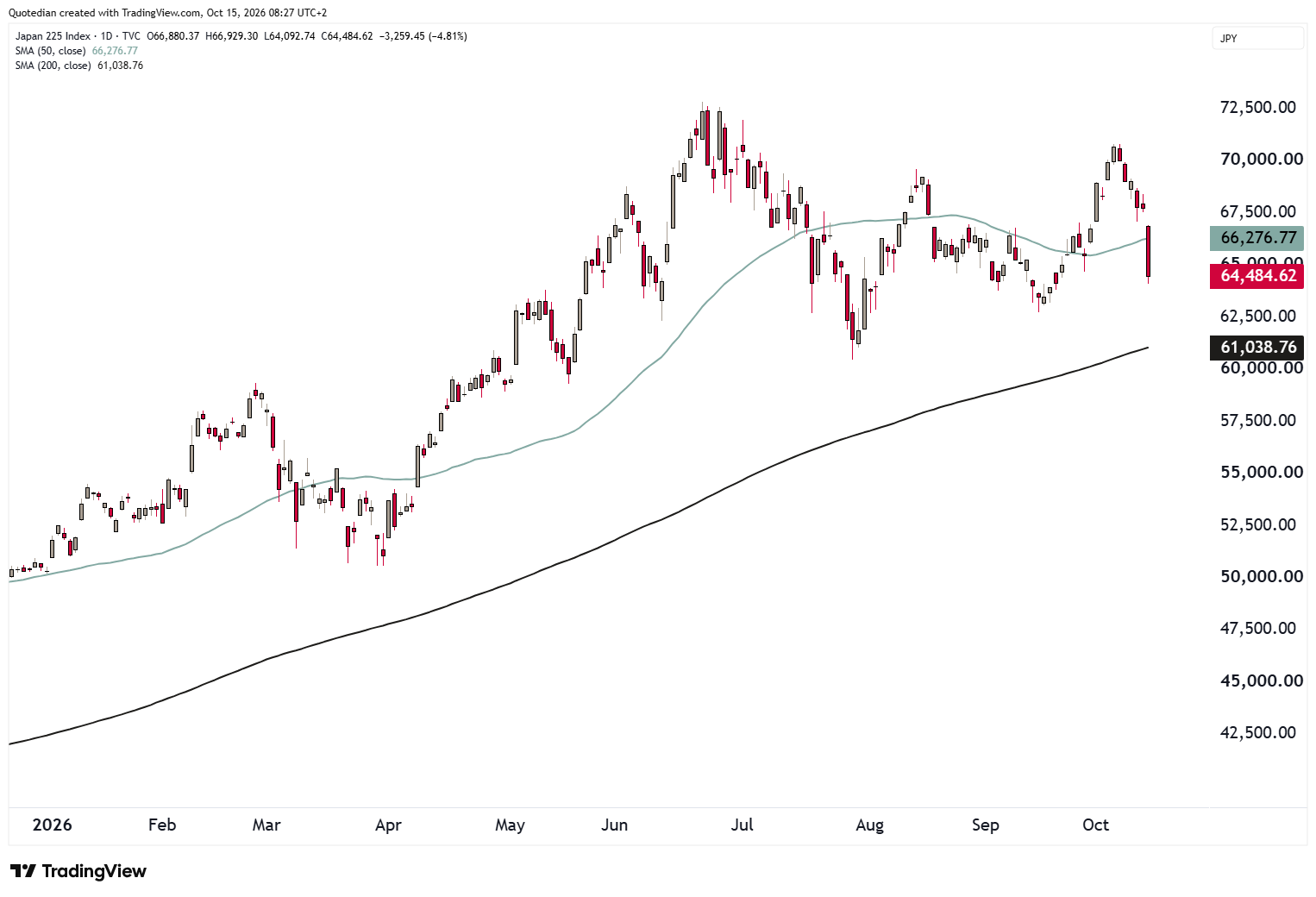
Yes, the KOSPI (also see below) dropped an even less attractive nearly 8%, but this market has become an uninvestable meme market anyway.
To finish today’s letter, one main theme for the (memory) chip makers industry is that cheaper, equally-good DRAM (dynamic random access memory) are now flooding the market. CMXT, which went public this summer, is one of those companies, providing such chips for example.
The sufferers? Micron, SK Hynix, Samsung … anything that populates Roundhill Memory ETF (DRAM US) really. Hence, that may still be an attractive short…
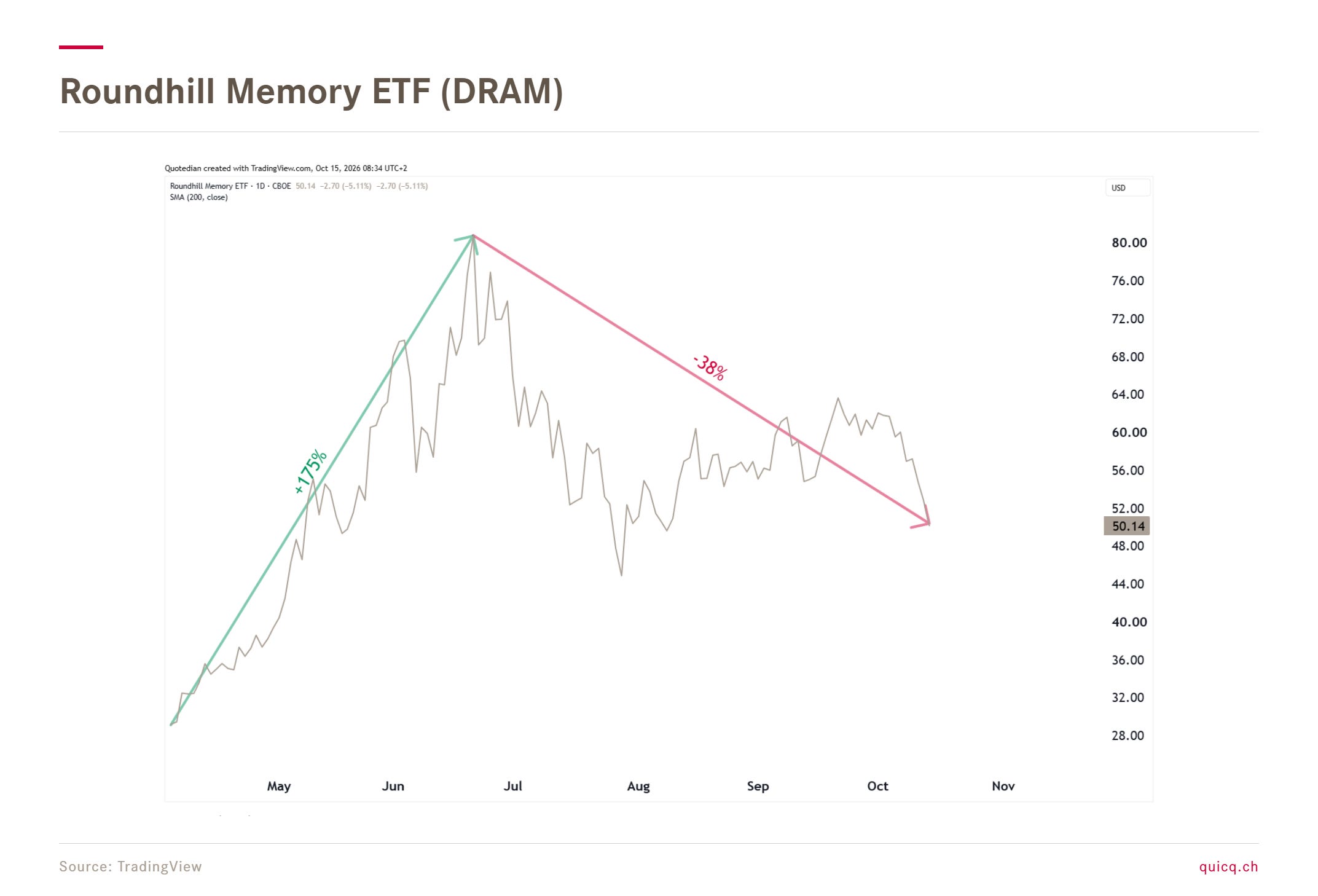
Full roundtrip in progress?

In today’s Quote of the Day, we review rule #4 of legendary technical analyst Bob Farrell, which could also be summarized as “what goes up, must come down”.
The chart below looks at the Kospi (top clip) and the Kospi relative to its own 200-day moving average (bottom clip):
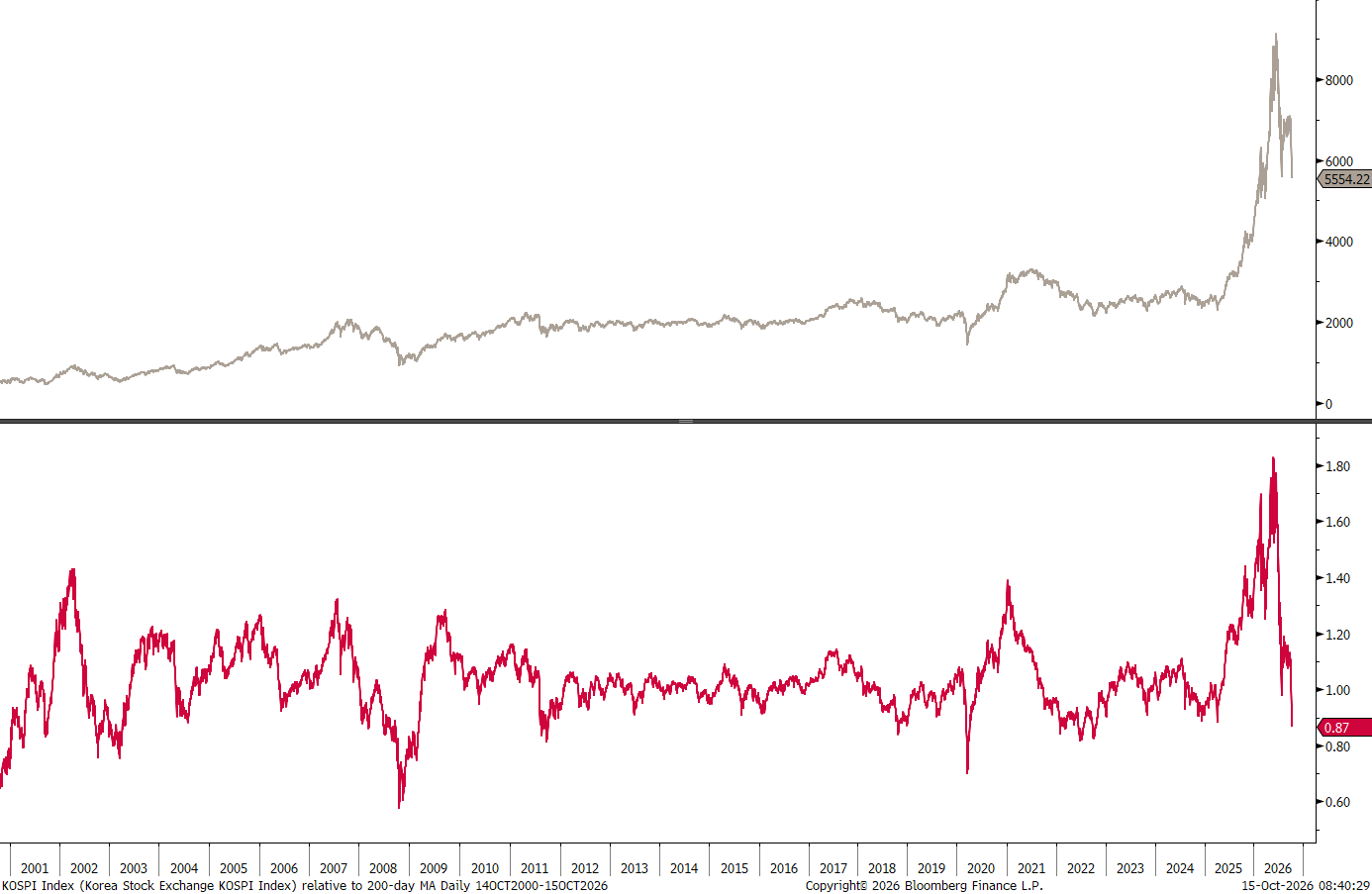
If Newton’s Law of “For every action, there is an equal and opposite reaction.” applies here, there’s some more downside ahead.
Stay tuned…

UK: Industrial Production, Trade Balance.
Switzerland: Producer & Import Prices
US: Retail Sales, Empire Manufacturing, Initial Jobless Claims, PPI, Federal Budget Balance
Earnings: Schwab, Interactive Brokers, US Bancorp, Prologis, TSCM
May the Trend be with You!
André

The Important One:
Everything in this document is for educational purposes only (FEPO)
Nothing in this document should be considered investment advice
Investing real money can be costly; don’t do stupid shit
Leave politics at the door—markets don’t care.
Past performance is hopefully no indication of future performance
The views expressed in this document may differ from the views published by NPB Neue Privat Bank AG
The Legal One: