

“The impediment to action advances action. What stands in the way becomes the way.”
— Marcus Aurelius

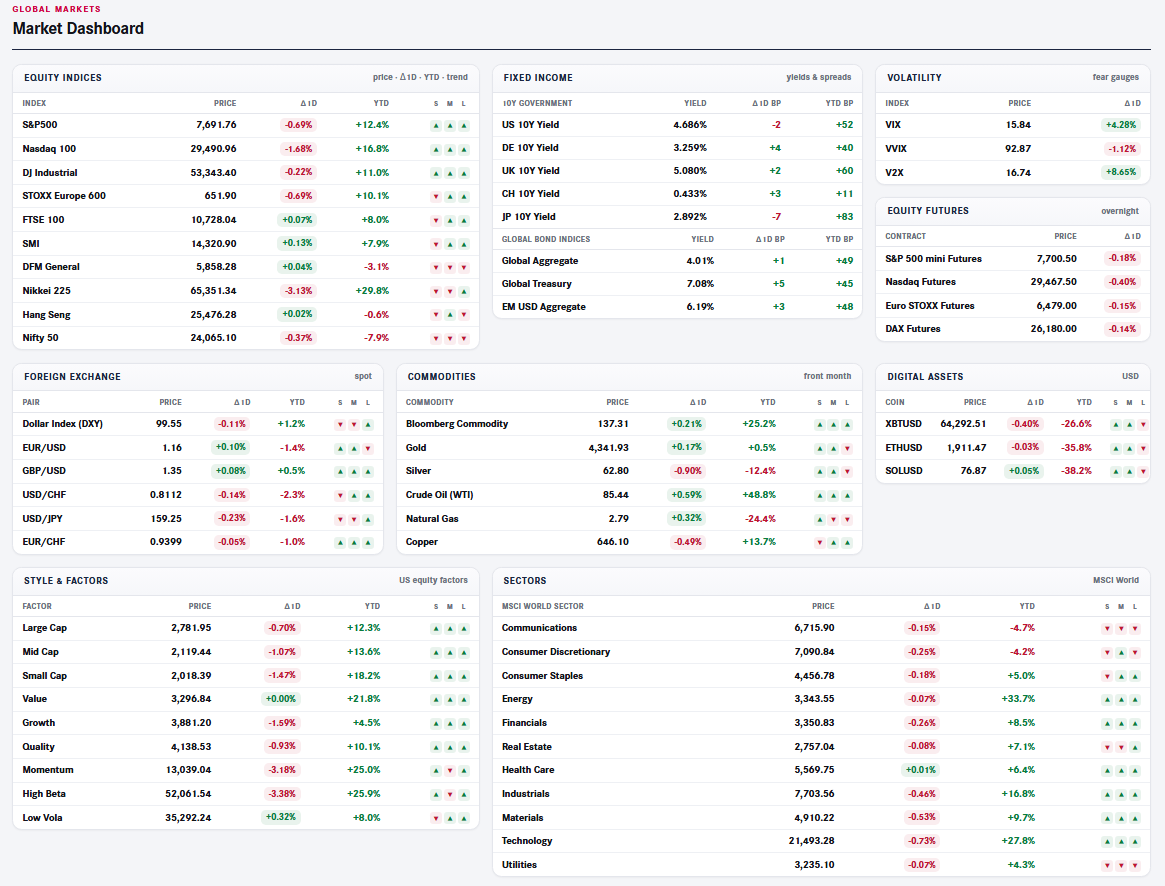
Click on PDF Download below for the full dashboard:


In Monday’s Quotedian (click here) I probably sounded a bit overly optimistic, which I still am (for the next few weeks at least). However, that is not to say that the road ahead is about as stony as it can get. Many of those pebbles are Strait of Hormuz (SoH) related, but one bigger, more important rock just reappeared and a pothole may lay right behind it:
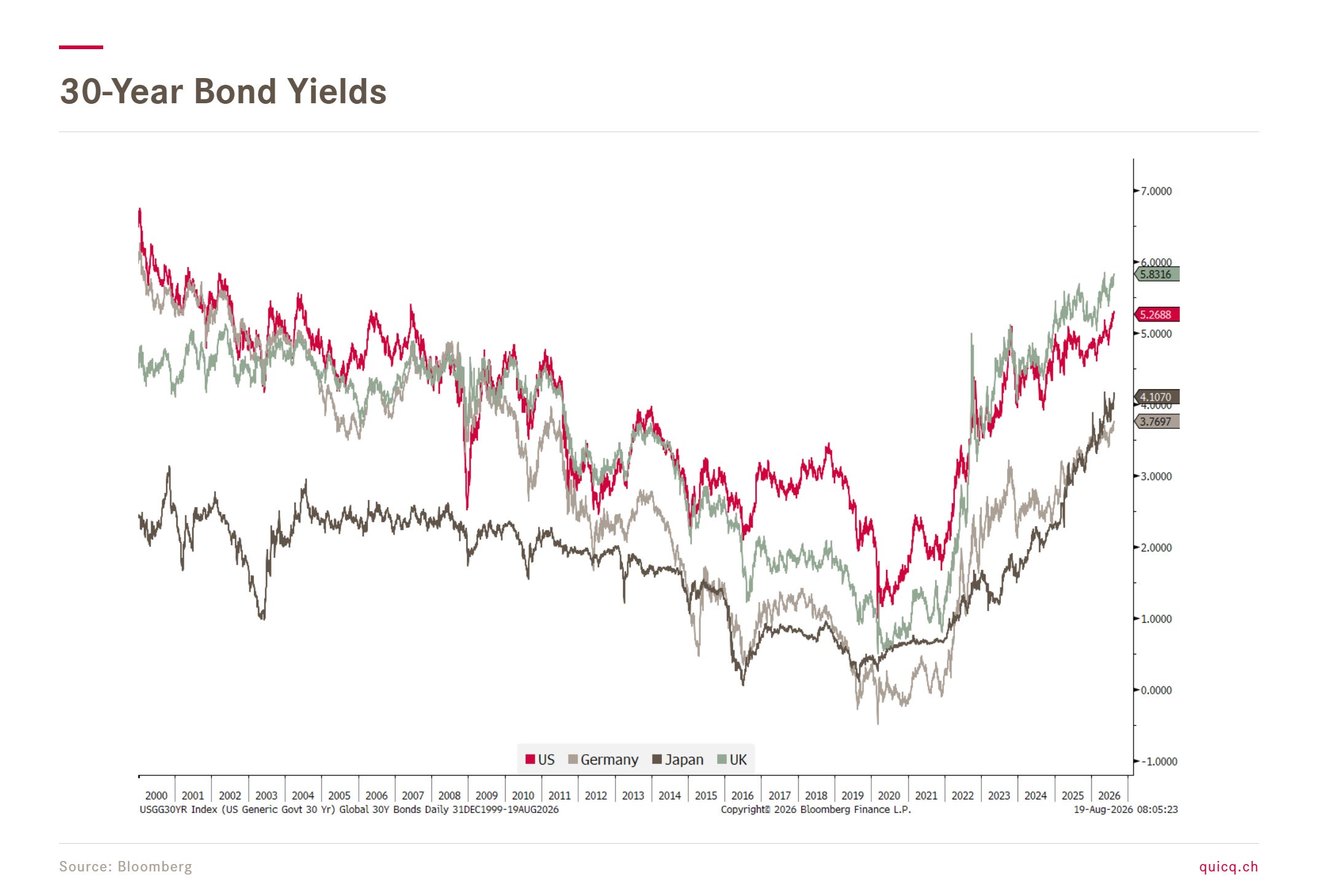
Yes, bond yields, that’s right. Long-term bond yields, the 30-year version in our chart above, are hitting multi-decade highs. And this, despite ‘benign’ US inflation numbers as we had discussed on Monday. However, as also discussed, the upward pressure on yields probably stems partially from the inflation factor, which in a world of rising global geopolitical tensions, is not diminishing to say the least, but also from the rapidly increasing debt and increased competition for capital via the hyperscalers issuing bonds at record paces.
The US is not the only debt ‘abuser’, but reaching the USD40 Trillion milestone probably this week does make it THE posterchild:

On the equity side, higher yields are taking their toll (at least short-term), especially on longer duration stocks, such as the tech segement. Here’s the Nasdaq:
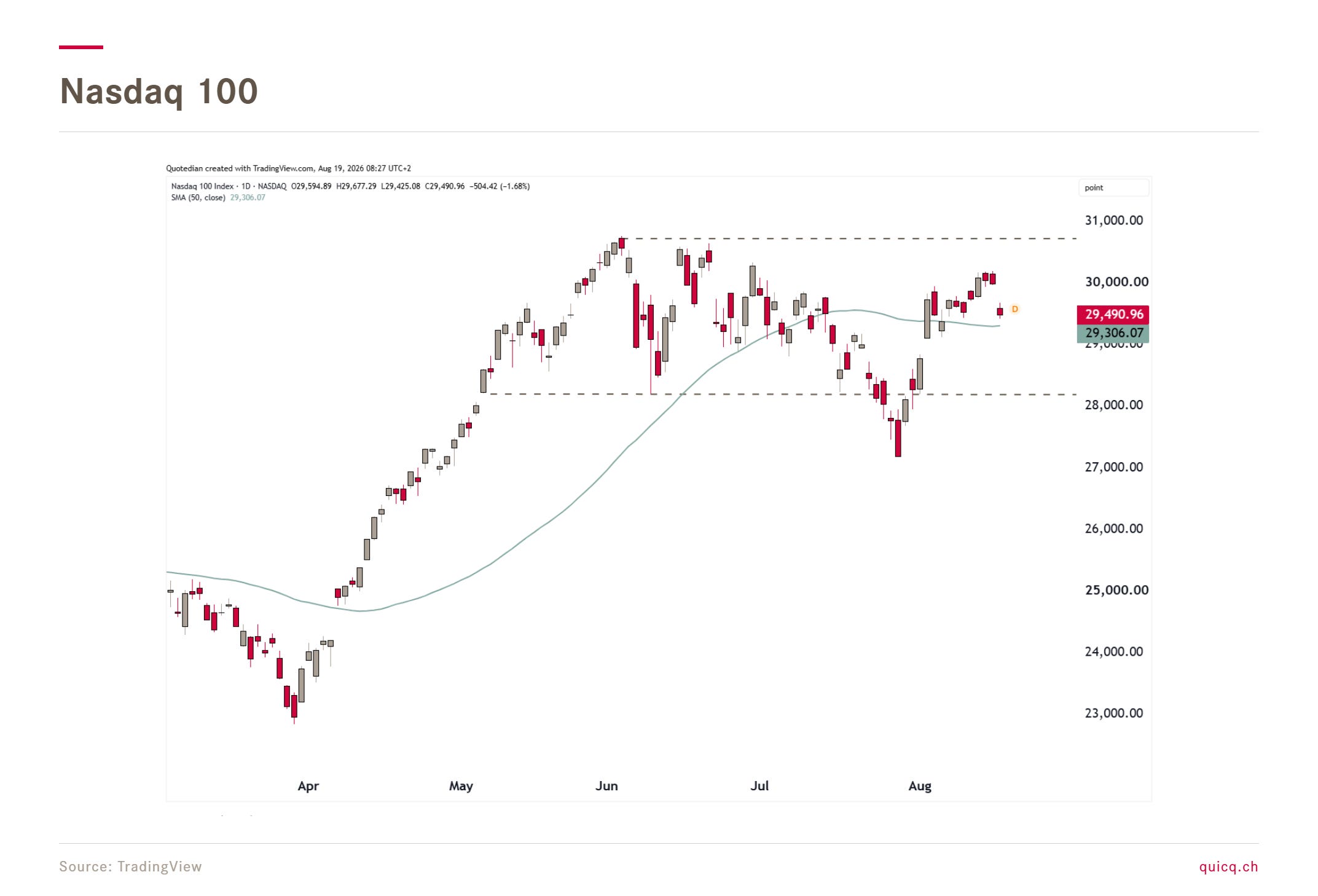
We have to note here, even though it is currently not our main scenario, that the Nasdaq is at danger of putting in a series of lower highs and lower lows (aka Downtrend):
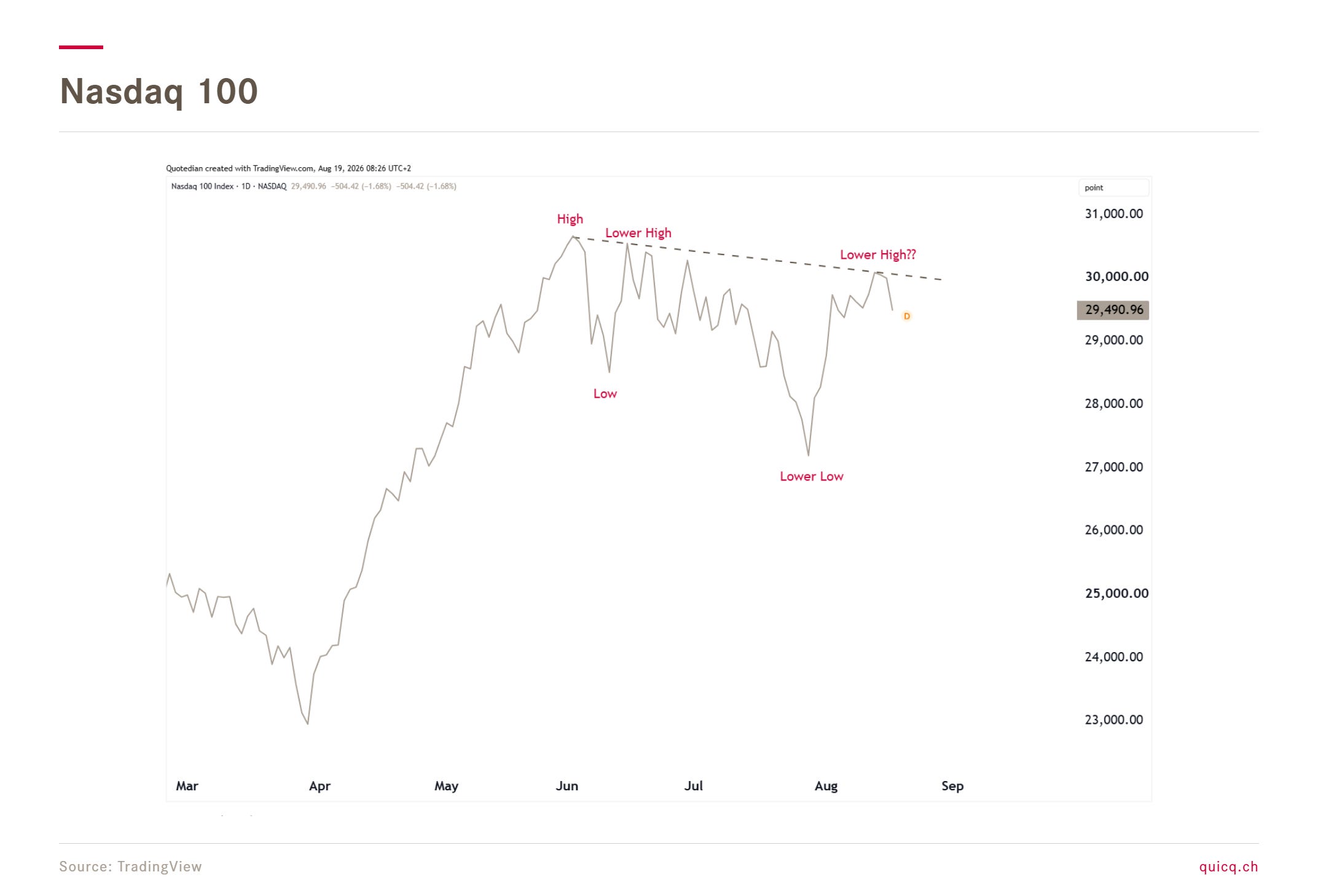
Stay mindful, I’d recommend here…
The grunt of yesterday’s sell-off was focused on the semiconductor subsector. Here’s the SOX:
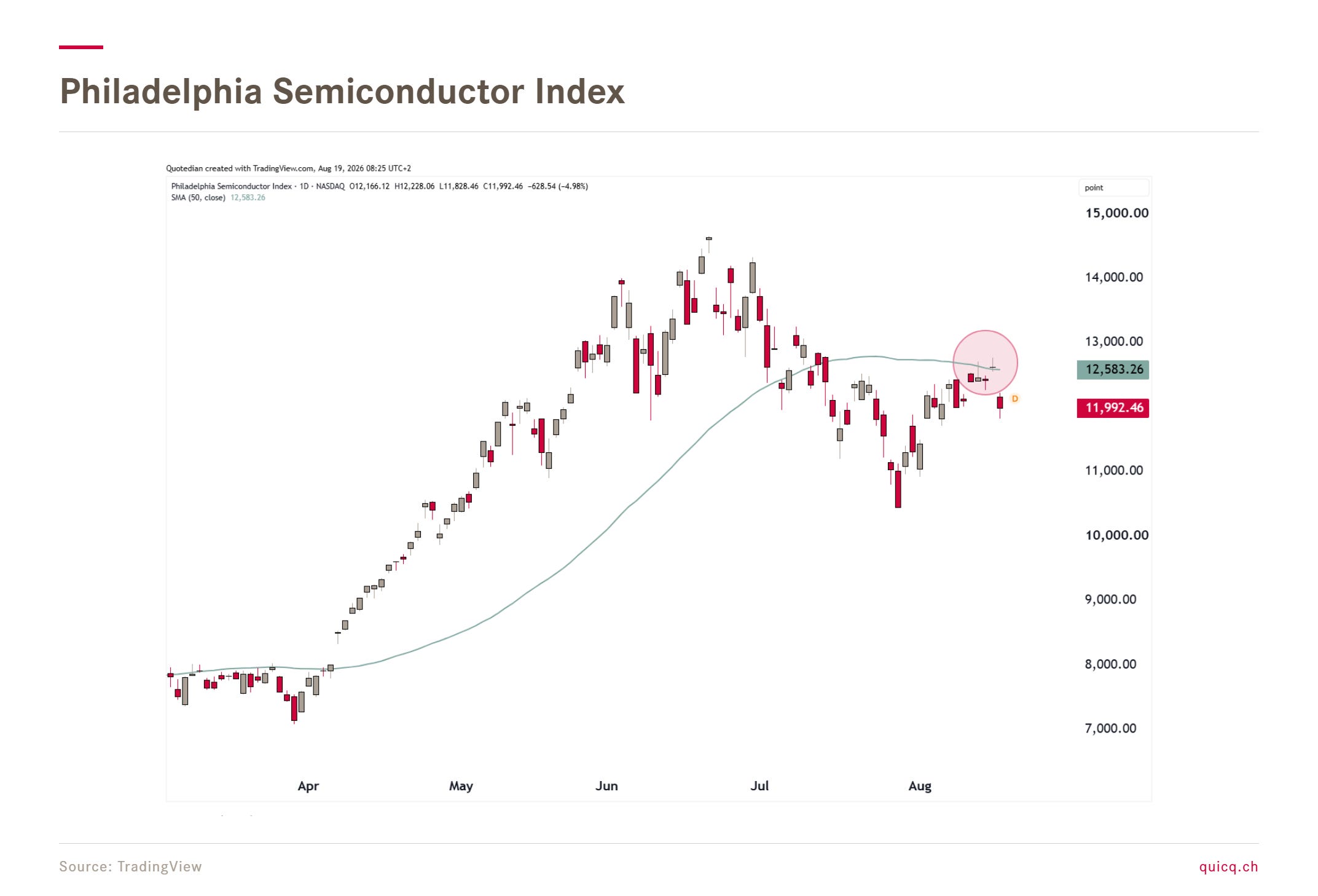
That rejection at the 50-day moving average (greenish line) is omnious.
But before we all run out of the building crying “we’re all gonna die”, let’s remember that the broader S&P 500 is a mere 1.5% away from its ATH:
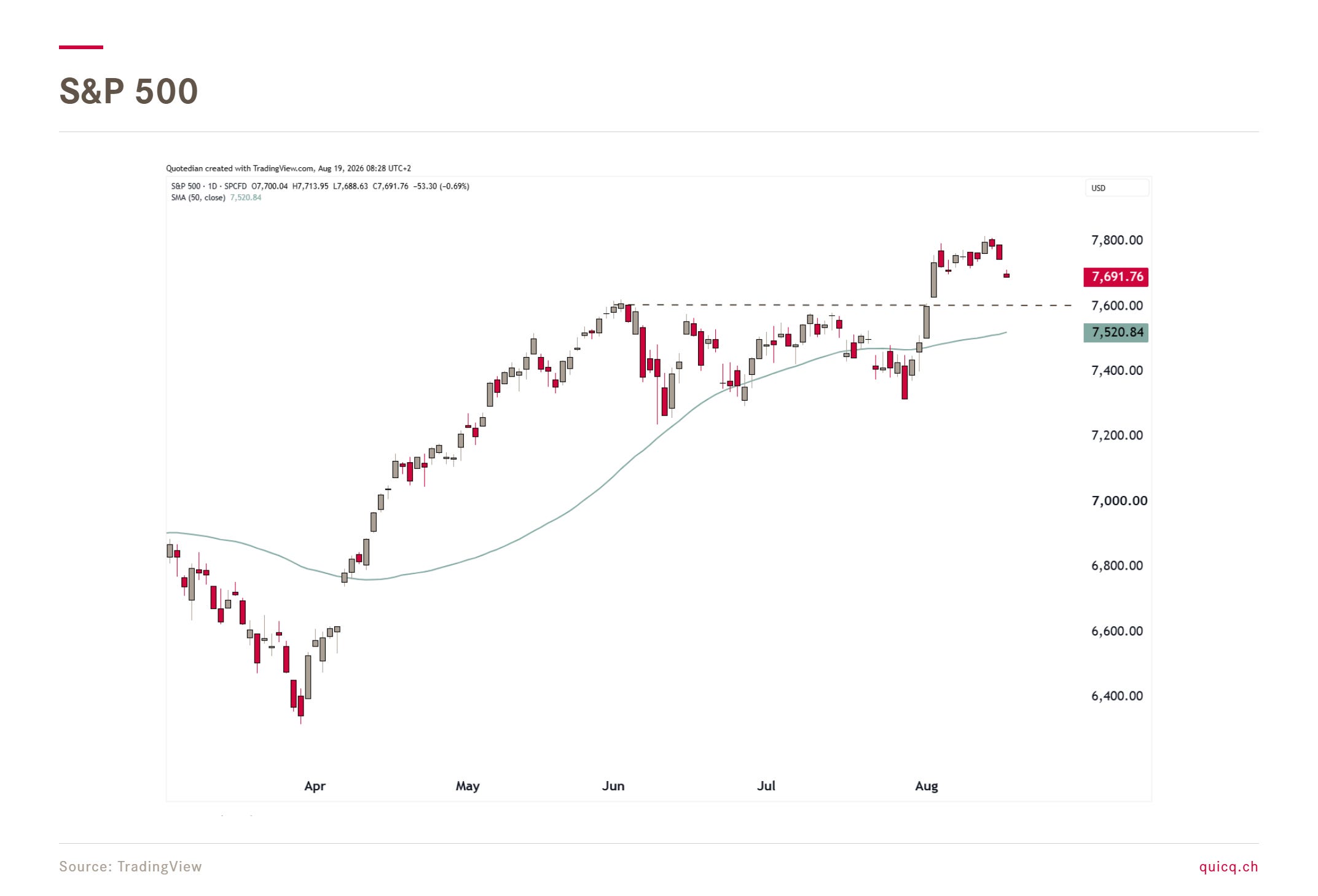
AAAANNNDD, the other thing to remember is that there is always a bull market somewhere.
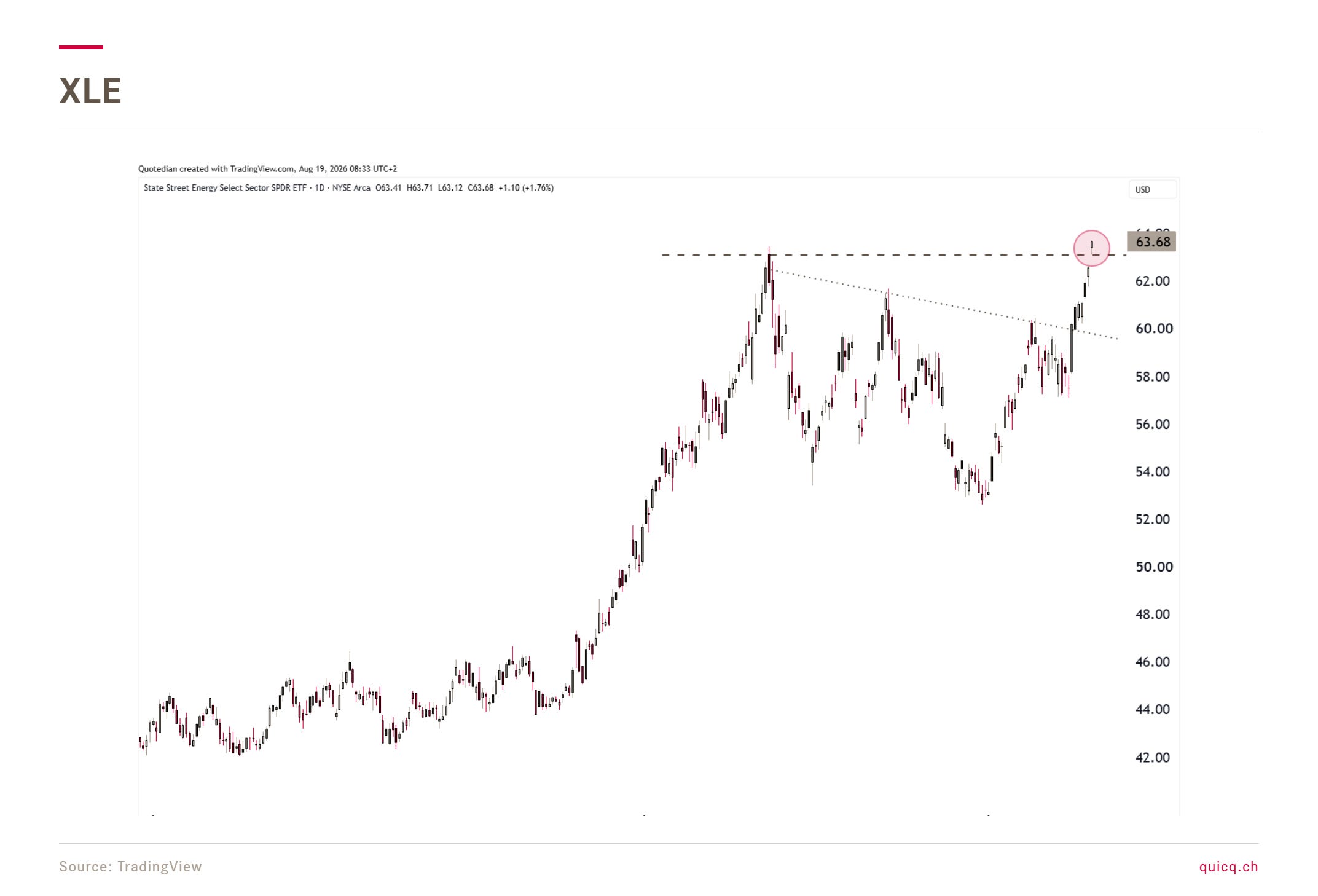
In that context, Energy stocks (XLE), which we highlighted as an area of interest at the beginning of the week, just hit a new ATH:
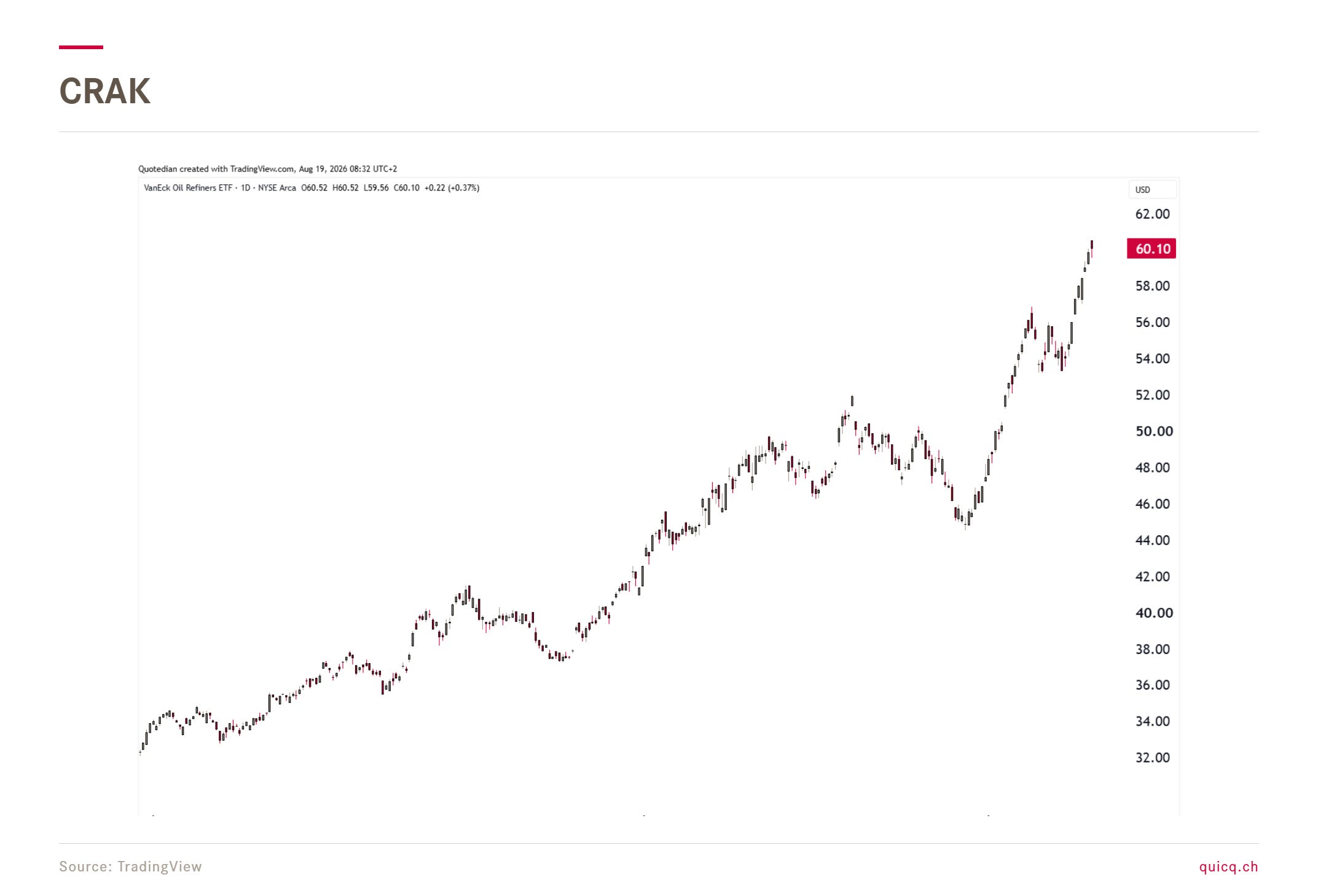
Maybe it is still not too late to get a foot, or at least a couple of toes, into that Refiner ETF (CRAK):
Due to time constraints I will skip other asset classes (FX, Commodities) today, but I encourage you to post your question and/or engage in dialog in the comments sections:
It would be nice to get this community more interactive, or what do you think?

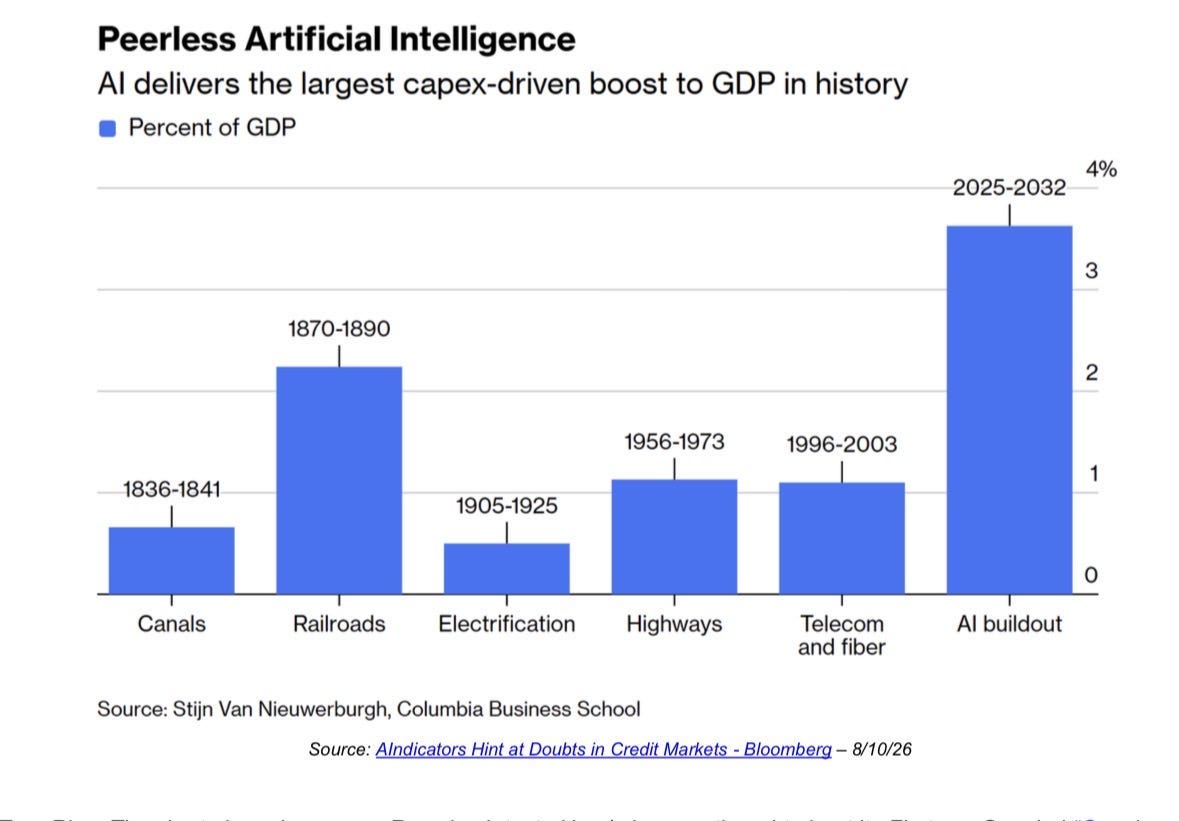
An interesting chart here, which needs little explanation. It shows currently (planned) capex on the AI build-out in percent of GDP and compares it to previous super-projects:

Not a lot on the radar today - at least scheduled …
The market will look at the FOMC Minutes due around 8 pm CET. On the earnings front we already had numbers out from HK Exchanges & Clearing, Geberit and Straumann. Before US market opening earning from retailers Target and Lowe’s may give some insight to the state-of-the-consumer.

Everything in this document is for educational purposes only (FEPO)
Nothing in this document should be considered investment advice
Investing real money can be costly; don’t do stupid shit
Leave politics at the door—markets don’t care.
Past performance is hopefully no indication of future performance
The views expressed in this document may differ from the views published by NPB Neue Privat Bank AG
Very interesting analysis. I share the near-term optimism, but I think the bond market may be sending a more important message than equities are currently willing to acknowledge.
What strikes me is the combination of relatively benign reported inflation and long-term yields nevertheless pushing toward multi-decade highs. If inflation alone cannot explain the move, then the market may increasingly be pricing a structural change in the supply and demand for capital: enormous sovereign borrowing requirements, defense and infrastructure spending, the AI/hyperscaler capex boom, and potentially a higher geopolitical risk premium.
That raises an interesting question: "what if the real risk to equities is not another inflation shock, but a persistently higher cost of capital?"
In that environment, the distinction between companies generating strong cash flows today and "long-duration" businesses whose valuations depend heavily on profits many years into the future becomes increasingly important. The weakness in semiconductors could therefore be worth watching not simply as a technical correction, but as an early indication of this repricing.
At the same time, I agree with the point that there is always a bull market somewhere. Energy/refiners are a good example. Higher geopolitical risk, constrained energy infrastructure and stronger nominal growth could continue to favour sectors with real assets and immediate cash generation.
For me, the key indicator over the coming weeks is therefore the long end of the yield curve. If 30-year yields continue rising while inflation remains relatively contained, we may need to stop asking "When will the Fed cut?" and start asking a much bigger question:
"What is the appropriate valuation for financial assets if the world has entered a structurally higher-interest-rate regime?*"
That could become one of the defining investment questions of the next several years.